
10/9/2026
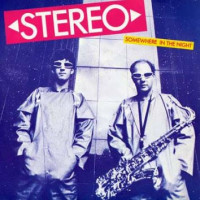
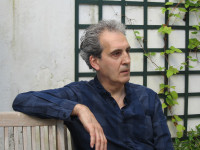
Thierry Potiron/Noritop is a French musician, composer, arranger and producer whose career has spanned several decades and a fascinating range of musical styles. Best known as one half of the influential electro duo STEREO, formed with Bernie Adam in 1982, Noritop helped create the cult classic Somewhere in the Night, a track that has continued to attract attention within electronic and synth music circles.
His musical journey has taken him from the electronic sounds of the 1980s through production, composition and collaborations across different genres, including relaxation and New Age music. In 2018, he began a new chapter with STEREO in SOLO, revisiting and developing the distinctive electronic sound that has remained central to his musical identity.
With a career encompassing STEREO, The Sixties, STEREO in SOLO and numerous collaborations and remixes, Thierry Noritop offers a unique perspective on the evolution of electronic music — from its early days to the modern synth scene.
Those who frequent the site will also know that Thierry is a co-promoter and plays an important part in promoting the site's updates across social media platforms. I would therefore like to take this opportunity to personally thank him for all his support.
We are delighted to welcome Thierry to the Revival Synth Q&A section to talk about his career, his music, STEREO, STEREO in SOLO, and the stories behind the sounds.
Q: How did your musical career begin?
A friend of my brother’s popped round with a guitar… It was the most memorable
encounter of my life; I was 13.
Q: What first attracted you to electronic music?
I’m, first and foremost, a guitarist, brought up on Keith Richards and Pete Townsend. My
interest in electronic music came much later… I loved the songwriting of Bowie and Genesis,
and then there was krautrock (I hate that word…) with Kraftwerk, Faust, Tangerine Dream,
Can and so on. So my interest in electronic music began in the late 70s and early 80s.
Q: What was the musical atmosphere like in France when you started making electronic music?
Apart from Jean-Michel Jarre, whom I quite liked, there was nothing particularly exciting
for me; to be honest, I didn’t know much about it. At the time, I discovered Joni Mitchell
(starting with Hejira), and she introduced me a bit to jazz… So, actually, quite a long way
from electronic music.
Q: How did your collaboration with Bernie Adam come about?
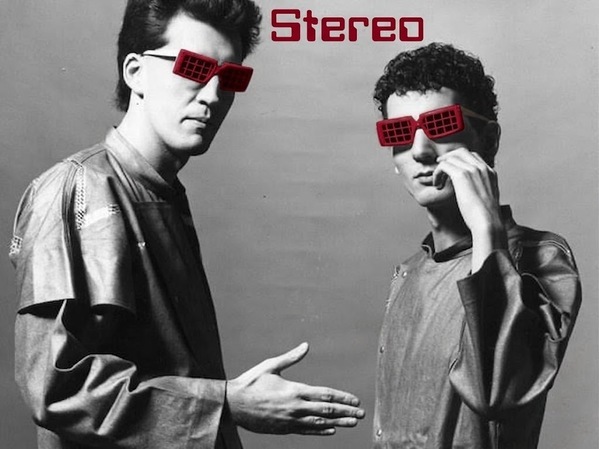
A mutual friend put us in touch with each other. We hit it off almost straight away; there was a certain chemistry between us. I was looking for an English voice, a singer; Bernie is perfectly bilingual, French pop at the time was rather dreary. So we wrote the lyrics in English (more Bernie than me, of course – I was the musician of the pair, as Bernie didn’t play any instruments). In short, we did a few projects together: Bernie’s solo album and a couple of singles, we did a few projects together: Bernie’s solo album and a couple of singles, and also around ten singles as songwriters and producers.
Q: What do you remember most about recording “Somewhere in the Night”?
I was under a bit of pressure (some things weren’t working out, others were…). We were lucky enough to have Roland Romanelli on additional keyboards – he was brilliant; watching him work was a real joy and a valuable lesson. Actually, my memories are rather vague… As a bit of a side note, I wrote “Somewhere” whilst doing laps in the swimming pool; we obviously reworked it with Bernie to give the song a less aquatic feel. LOL
Q: Did you realise at the time that “Somewhere in the Night” might become a cult record?
No, it came as a complete surprise.
Q: What was your reaction when “Somewhere in the Night” was rediscovered many years later?
A great joy – quite simply, a very great one. Not so much the fact of being recognised
belatedly (the 1982 single had done reasonably well), but rather rediscovering this song that
I hadn’t listened to in ages; I must admit I was rather proud.
Q: How did the Minimal Wave reissue change the story of STEREO?
Everything!!! A huge thank you to Veronica Vasicka. It changed everything!!! I was making
relaxation music, adverts, corporate films and music library tracks, but I wasn’t writing any songs.
Bernie and I got back in touch (we hadn’t seen each other for about thirty years) with the aim of working on a new STEREO album. An album produced by the marvellous and extraordinary Ralf Beck from Düsseldorf.
The album ' Back To Somewhere' was released in 2015, to rather mixed reviews…
We should have taken another year to write more tracks and have more to choose from.
There are some lovely things on it. C’est la vie.
Q: Did you work on other projects during the 1980s?
As I told you, relaxation music, adverts, corporate films and music library tracks and, to be honest, there are a few forgettable songs for artists who didn’t make much of a mark; I’d rather forget those songs… Some of them are, unfortunately, on the internet.
Q: How important were the limitations of early electronic equipment to your creativity?
It’s difficult to answer that question… Back in the STEREO days, I had a Korg MS20 and an Elka Rhapsody 610. I don’t remember ever feeling limited creatively because of that. That was well before the Sequential Prophet 5, which I couldn’t afford to buy.
Q: Were there any artists or musical styles that influenced you?
I think that when you love an artist, you’re automatically influenced by them, often without realising it or meaning to...
My life as a songwriter would have been a miserable one if I hadn’t adored David Bowie, and later on, the electric Joni Mitchell, Steely Dan, Rickie Lee Jones, Prefab Sprout, David Sylvian, and revered that Scottish gem, The Blue Nile. I can say with certainty that my favourite composer now is Burt Bacharach, with Tony Banks of Genesis not far behind.
Of course, the 60s – the Beatles, the Stones, the Kinks, The Who and the Bee Gees – were a major influence.
Q: How has your approach to composition changed over the years?
I must admit I haven’t changed much; I still work in the same way. I sit down at the keyboard and let inspiration come, if it comes… I sometimes use a drum loop to get a groove going.
Q. What is the difference between composing for yourself and composing for another artist?
I write for myself first and foremost; I’m not sure I’m capable of doing it properly for others.
I’m impressed by the Bee Gees, who wrote some marvellous songs for Dionne Warwick, Leo Sayer, Diana Ross, Barbra Streisand and others: ‘Guilty’ and ‘Heartbreaker’ are amazing songs.
Q. Do you still continue collaborating with other artists?
Yes, I work with Ulf Müller of Projekt Ich and indirectly, I’m grateful to the remixers who do me the honour of remixing my tracks.
Check out our tracks under the alias, M.U.N.T Connection ( surname initials reversed )
Q. Your career has covered electronic music, pop, production, arranging and relaxation music. Why have you explored such different areas?
I didn’t have any other work outside of music, so I had to earn enough to pay my rent; that’s why I made a lot of different tracks – some better than others, to be honest.
Q. What role does the studio play in your creative process?
My home studio plays a vital role; it allows me to experiment, to make mistakes, to
venture into uncharted territory, and to create a hundred different versions without having to
pay an astronomical fortune to a recording studio.
Q. Do you prefer working with analogue or digital technology?
I don’t have a preference.
Q. What do you think about the way electronic music has evolved since the 1980s?
Techno gave electronic music a real boost, as did the French Touch. There’s a lot of different music out there; it’s very varied.
Q. Do you think your early work influenced your later solo music?
Yes.
Q. What inspired the STEREO in SOLO project?
I live solely for and through music; I wanted to stay in the electro scene, write songs on my own, and pen the lyrics. STEREO’S second album wasn’t a great success… It was time for Bernie and me to go our separate ways; there’s a ten-year age gap between us, and our artistic visions were often poles apart – a difference that resurfaced despite the passing of time.
Working on my own and singing was a bit of a challenge, so STEREO in SOLO came about quite naturally. I’ve never felt so free as I have on this solo venture, without having to ask anyone’s opinion or make compromises or concessions that often lead nowhere.
Q. How do you feel when you listen to recordings you made decades ago?
I find myself thinking I could have done better… I’m never satisfied, but to be honest, I love a song by STEREO called ‘Nowhere in the Island’, which is one of the best pieces of music I’ve ever written, but I’ve never managed to find the right arrangements for it.
I do think, however, that ‘Moonshine’ is a complete success. Those are my two favourites written with Bernie.
Q. Is there a particular record from your career that holds a special meaning for you?
I love that album, Ayuthya – Green Planet India, which I made in 2001 with Dominique Verdan and Daniel Finot. We recorded it with Indian musicians – it was fascinating.
The album was released in the US, and they even pressed a promo CD. Dominique, a brilliant composer, sadly passed away a few years ago. I miss him…
Q. What advice would you give to a young musician discovering electronic music today?
Don’t pay too much attention to advice… It might sound a bit ‘cliché’ to say so, but you have to find your own way.
Q. After such a long career, what still motivates you to make music?
I don’t work all that much; sometimes I don’t make music for weeks on end because I’m doing things I didn’t have time for before. I’ve spent my life working; now I’m slowing down and living.
Q. If you could go back to 1982 and give yourself one piece of advice, what would it be?
To be wary of record labels, of contracts signed without having been read carefully, and of people who tell you you’re talented but then stab you in the back. That said, it’s not all doom and gloom – there are some fantastic people in this business, and I’ve had the pleasure of meeting some wonderful people, such as Ralf Beck.
Q. What would you like listeners to take away from your music?
Oh, it’s so hard to answer that. I’m not quite sure, but I’d like listeners to think that I’ve
done this job with integrity. I’ve loved my life as an artist with a passion!!!
Thank You, Sir Thierry. Is there anything else you would like to add?
Yes, thank you, Andy, for this interview, which has given me great pleasure in delving into the past. I’d also like to speak on behalf of all artists in the electro scene to thank you warmly for your work with Revival Synth, and for the invaluable support you provide to the electro scene.
Merci x