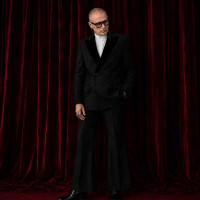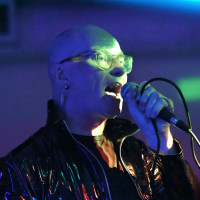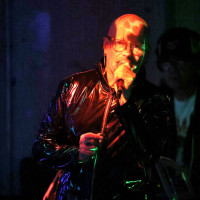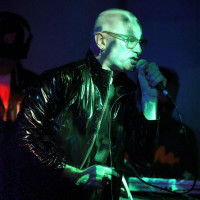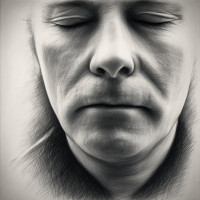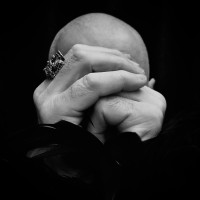
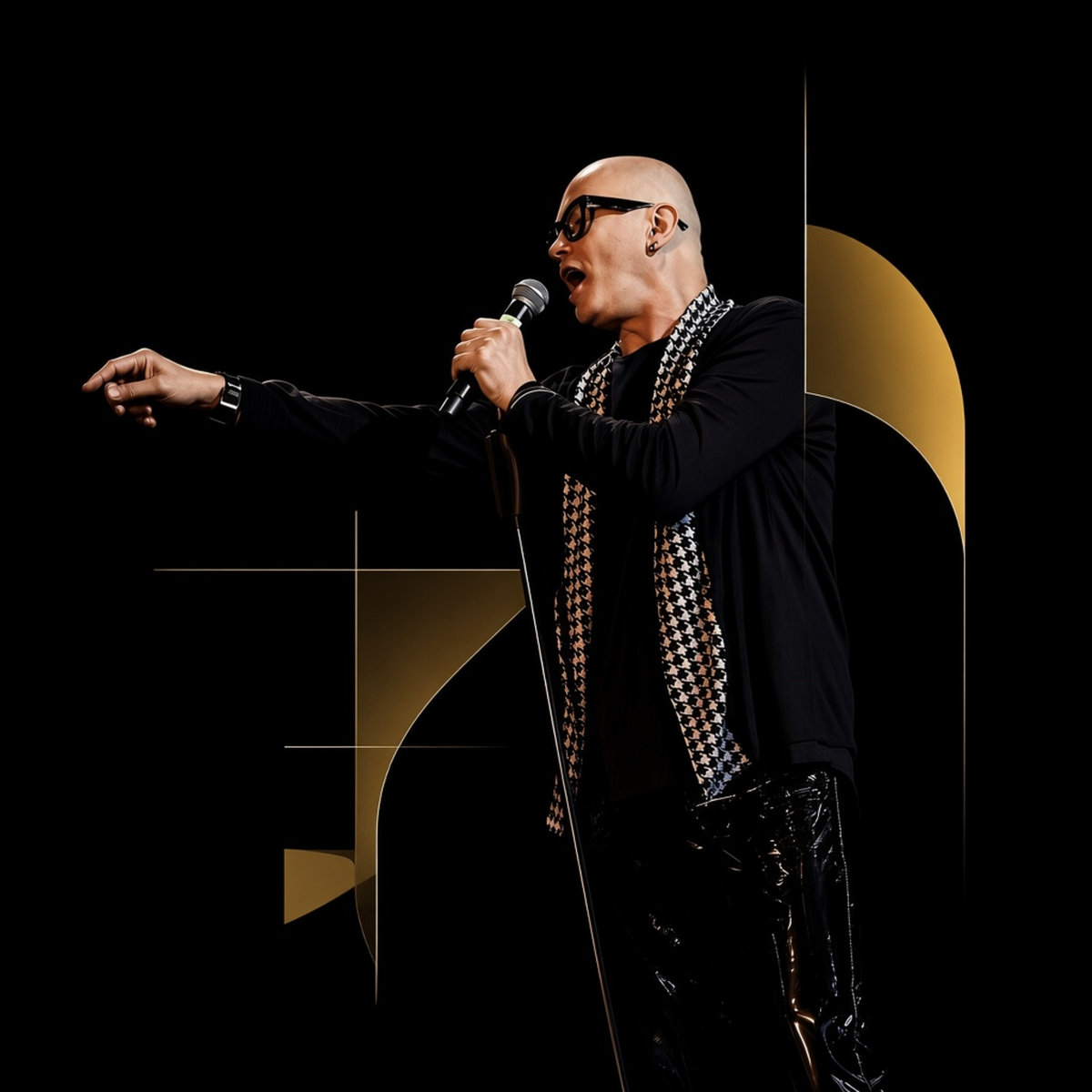
Aidan Casserly is an artist whose musical journey has taken him through numerous
creative avenues, from electronic pop and synth-driven soundscapes to poetry, film scores and experimental music.
Based in Dublin, Ireland, Aidan has built an impressive body of work, releasing more than 40 albums since 2002. As a vocalist, songwriter, producer and poet, he has been involved in a variety of musical projects, including Empire State Human, The Wazp, The Garland Cult, Figaro, KuBO and Silver Moon.
With such a diverse catalogue behind him, Aidan continues to explore new musical territories, collaborating with other artists while maintaining his own distinctive creative identity.
We caught up with Aidan to discuss his musical beginnings, influences,
collaborations and the creative thinking behind his many projects.
Aidan, let's start at the beginning. What first inspired you to get involved in music, and when did you realise that creating music was something you wanted to pursue seriously?
Firstly, thank you Andy so much for taking the time to interview me, and write such brilliant questions for me to answer. I really appreciate what you are doing and the exposure you give the scene.
I grew up in a South Dublin suburban family home with five brothers. The eldest three had very diverse musical tastes, and I was always fascinated by that range of musical references. Bowie, Led Zeppelin, Roxy Music, Elvis Presely, Frank Sinatra, Johnnie Ray, Mahalia Jackson, Al Stwewart, early-Elton John, Janis Ian. My nearer brothers were more pop orientated, and that full mix really made a vast impact on me.
Starting as a fan of all these amazing legendary artists and being familiar with the songs, styles, voices, made a long lasting impression. My Mum and Uncle sang to a very high standard, and I would be asked to sing along at family events with my twin.
All this leads into the area of wanting to create music myself. In primary I was fascinated with poetry and words, more than books and plays. Our English teacher would ask us to write additional verse to classic poems as an exercise and I found it relatively easy and immensely enjoyable. Hearing the early 80s electronic pop pulses really opened the door and opportunity for me. Visage, Eurythmics, Blancmange, SPARKS, The Human League, Soft Cell, Giorgio Moroder, Italo-disco, High NRG, New Order, Gary Numan, Bronski Beat, Dead or Alive, Scritti Politti. These created an electronic foundation for me. I realised that technology would bridge the lack of musicianship skills for me to begin my journey. This we did during school, when on a Friday myself, Brian O'Malley and Norman Keating would hire a Roland Juno, 808 drum machine, a 4 track cassette home studio, and a mic, and write, record and mix 3 songs over 2 days. Very D.I.Y. but what a sense of joy, accomplishment and pride we all felt.
Your musical career has covered a fascinating range of styles, from synthpop and electronic music to ambient soundscapes and more experimental territory. How would you describe your musical identity, and has it changed considerably over the years?
I am completely self taught musically speaking. I tried to learn notation but I have issues with numbers, and notation to me felt more like maths, so I was unable to get to grips with the details. Through blood, guts, determination and graft I dragged myself from a completely non-musical type entity to a full on, self contained and credible songwriter, singer, writer and producer. Many who learn that way, are capable of multiple skills, but also suffer from imposter syndrome. I was one of them myself, so learning to appreciate the way I worked was first and foremost. My musical identity is a 'soul in the machine' approach. I try to add beauty to where there is none, and a melodic pop hook to an intriguing lyric. With Empire State Human, ther references have been sci-fi, retro/futuristic, but commercial sounding too. I love that side. Bronski Beat taught me you could say something very serious, important, over a catchy synth hook.
Empire State Human has become an important part of your musical journey. What was
the original inspiration behind forming the project, and did you envisage it developing into such a long-running musical adventure?
After a number of other various bands/projects, I really decided to create a synth trio, with retro synths and beats, but with a contemporary approach. All the acts I love, the lead singer or frontman/person has a strong presence and personality, so I developed mine in a similar fashion. I stamp myself on every aspect of my music, and presentation.
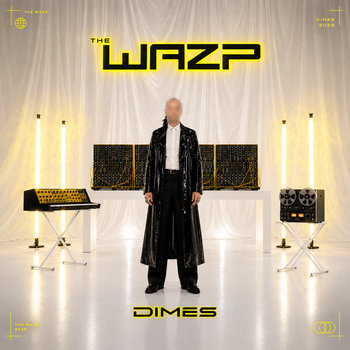
ESH was first an idea, then it was an actual band when we chose the name (early Human League song), we also had THE WAZP as the other name (named after the synth of the same name). That is why eventually, the idea of creating THE WAZP took hold. It struck me what would I have sounded like had we picked that name instead of ESH. The leaning was always towards a darker sound and theme than ESH, and as I recently debuted THE WAZP with the promo singles 'Open Up The Gates (ritual of the dolls)' and 'Dimes', you can see that alternative sound and project potential.
Signing ESH to Ninthwave Records, when Heaven 17 and Whitetown had also signed, was a big deal, and cemented the project as a proper synthpop band. For a number of years, we were Ninthwave's biggest selling acts, and when our cover of 'Halloween' got to #1 in the US iTunes dance charts, and broke into the official US iTunes singles charts, that was quite a big achievement. It led to an amazing live appearance in New York (Albion Batcave, with the acts Seabound and psyche).
You have released more than 40 albums since 2002, an incredible achievement by
anyone's standards. Where does your creative drive come from, and how do you continually find inspiration for new material?
My first professional release was with Empire State Human's 'Pop Robot' expanded album in 2002 on Ninthwave Records. The latest ESH album 'Opulent' is out January 2027 on ScentAir Records on CD/digital. That's 25 years of releasing. 40+ albums is a journey in itself, and I never took any one of them for granted, or that I would assume I could create another one. That is probably the key here. Not taking anything for granted - from inspiration to aspiration. Each is vital to the other. I've avoided analysing the writing process, so I keep an innocence and childlike quality to the process. Creating music is my passion. I see myself, and I live my life as an artist. I recognise that in myself first and foremost. That attitude I learned from Dirk Bogarde (legendary actor, writer) with whom I used to write in the 90s, when he returned to the UK from his home in France. I treasure his replies to me, his subtle acknowledgement of me which gave me self belief and drive.
The Wazp offers another fascinating dimension to your musical output, exploring darker electronic and synth-driven sounds. What inspired you to develop this project, and how does its creative direction differ from Empire State Human?
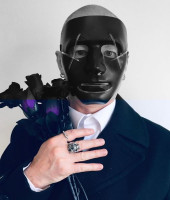
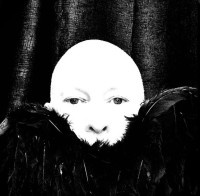
I've mentioned briefly earlier that THE WAZP was one of two names we were going to use in 1999 when setting up the band. Picking Empire State Human as a name, for the synthpop music I create, is very suitable for that project. THE WAZP offers me a darker, yet pop route to take. Distinctly different, as the debut album 'Dark Matter' will showcase. I'm very excited to get it completed, and begin record label hunting for it in 2027. For inspiration, I really needed to go dark, deep and slower musically speaking. My own personal life cycle (losing a brother and a Dad to cancer), gave me something to express, a hidden sadness, and questions about bigger life issues, which synthpop wasn't the genre to manifest them with. The two promo singles show a certain growth in me I feel. There's an alter-ego approach to this project, something other than me element, and that is why I blur out the face in the artwork and presentation.
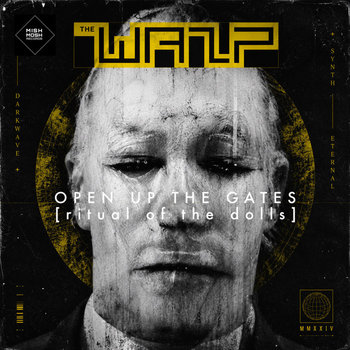
From November 29th 'OPEN UP THE GATES (RITUAL OF THE DOLLS)' will appear on all digital streaming sites worldwide. An album version (slightly bigger sounding), will appear on the debut album.
Throughout your career, you have worked with a variety of musicians, vocalists and
creative personalities. What do you look for in a collaborator, and do you find that working with others takes your music in directions you might not have explored alone?
The most important thing I look for in any potential collaboration is a connection. You must feel a deep sense of connection with someone. It's almost like a love affair without the carnality.
It absolutely takes me in musical areas I wouldn't immediately navigate towards. For example this year myself and Brian Christopher (Amalgamated Wonders of the World), decided to write songs together. Brian works in atmospheres, moods and sonic expansion. I work mainly in song. We co-wrote 5 songs as THE GATEKEEPERS, a sort of mini-album, new world electronic aesthetic. We called this album 'A Wish In The Mind Of Man'. It's essentially about hope in this mixed up, dark world.
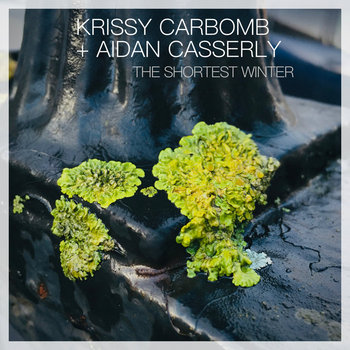
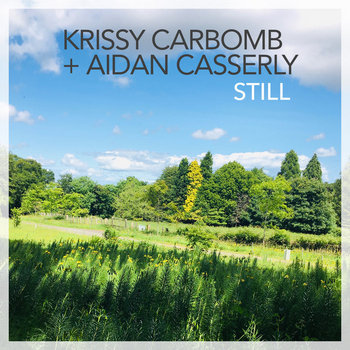
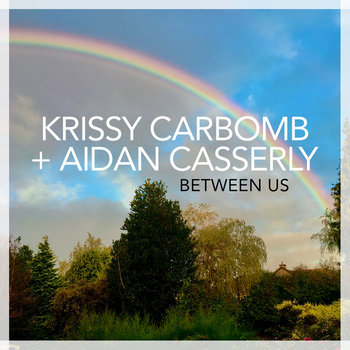
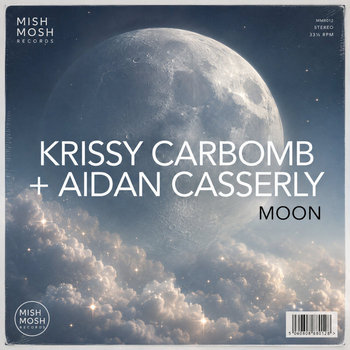
Over the last year, I've also worked with a talented, young female poet based in the US called Krissy Carbomb. We've done a number of stand alone singles together. Her words, voice, and my music and production and artwork.
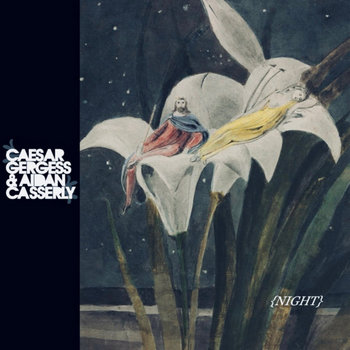
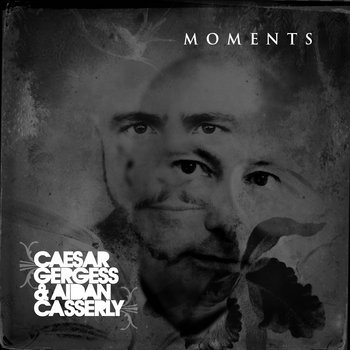
I've also created numerous tracks with my dear friend Caesar Gergess (based in Paris), and I love working with Caesar as he's such a talent, and understands the way I work, which is different to the way he works. It's a yin and yang in music.
Alongside your musical work, poetry has played a significant role in your creative life. Do you approach writing lyrics differently from writing poetry, or do the two disciplines naturally feed into one another?
Absolutely different approach. Whether I am working on my own poems, or setting another poet's work to a spoken music piece. It's a more insular, perfect world. Sensual, deep as an ocean and as vast as it is as long. I like the fact that with poems there are essentially no rules. Grammar is out the window if you so wish, rhymes need not match and the temperament or the piece can jump at any moment. Freedom with the tip of a pen.
I set up my own self publishing house for my own poetry books called lili PRESS https://payhip.com/liliPRESS
My 6 books thus far are up there, and I've three more coming starting January 1st 2027.
The challenge for me is to find ways to challenge myself. It keeps me hungry as a creative person, and the muscle of creativity is prone to laziness, so I use this muscle every day. Every day I create something. It could be as small as a snare sound decision, or it could be an album artwork or a brand new lyric or song.
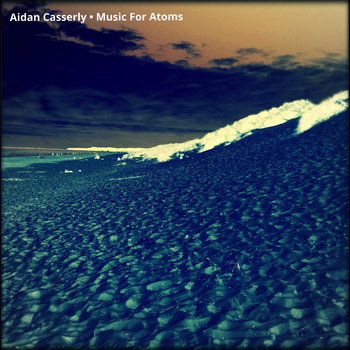
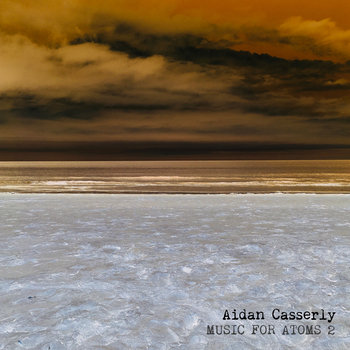
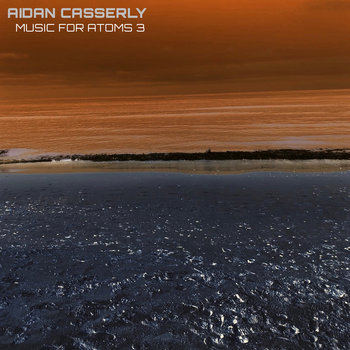
Your Bandcamp catalogue demonstrates that you are not afraid to experiment. Releases such as Music For Atoms 3 explore abstract, ambient and cinematic soundscapes. Is experimentation something you deliberately seek out, or does it happen naturally as part of your creative process?
David Bowie advised artists to venture out of their depth rather than staying in a safe zone. He cautioned against crafting work solely to please an audience or meet external expectations - “the Artist is no other than he who unlearns what he has learned, in order to know himself,”
That is such an amazing approach to have. Bowie really was a visionary, and if you can look at his body or work, see something you can relate to, then you are on the right path. I really loved doing my three 'Music For Atoms' albums. I have begun a fourth and final installment. They take time, as they require peace, tranquility and solitude of body and mind to create. Simplicity can actually be the most complex of all the genres.
I can't say I deliberately seek out experimentation, as that makes it all sound generic and pre-determined. Mood, inspiration and intuition are my personal rules. If my mood is right, and I feel inspired, and I find a starting point based on intuition, I'm in a very good place to create something. I will know within two minutes after turning on my equipment in my home studio if all these elements are in place. I trust this process, and it is my own personal view on creativity, so it won't work for everyone.
You have also explored the world of film composition, creating music for soundtracks.
How does writing music for a film differ from producing an album, and do you find composing around visual imagery particularly inspiring?
I have worked on a number of films, short films and music for adverts (Sony PlayStation one). All were challenging, and all were artistically successful in a personal way. My most well known original film soundtrack is the 'Amityville Toybox' one.
That was quite an experience. It was committed to composing this full soundtrack, and then I got pneumonia half way through the writing and recording and was bedridden. I had a finished date which I had to honour, so I ended up composing half the film from my bed via a laptop and midi keyboard, whilst on strong medication. I think it actually added to the weirdness and sense of unease.
If there is a difference between composing a film soundtrack album or a traditional song based album, then I would say the film one is more intense, submersed and almost claustrophobic. You are at the mercy of scenes or in my case I composed from the script not the rushes. I read the script to inspire the composition. The mood is something I developed in tandem.
When you look back at your extensive discography, is there a particular album or
recording that holds a special place in your heart? Perhaps one that represents an important turning point in your life or musical career?
For me looking back is a difficult position, as I always face forwards. But definitely the #1 in the US iTunes dance charts with 'Halloween' was immense. Having John Carpenter's London publishers ring me to congratulate me was out of this world.
Working with Wolfgang Fluer (ex-Kraftwerk) on the Empire State Human track ' Melancholic Afro' was a musical high point, as we were the first ever Irish band to work with an original member of that legendary band.
When Steve Bronski (Bronski Beat) produced one of the singles I did as The Garland Cult, called 'Talking with Aliens', and I signed that project to Ninthwave Records (North America) and Electric Fantastic Sound (Europe), that was pretty much a full circle moment, as I loved Bronski Beat so much. All these are turning points both in my life and in my musical career thus far.
One which hold a special place in my heart - is the album I wrote about and in tribute to Dirk Bogarde called Dirk Bogarde Suite
Having that special connection to the man himself, gave me a sense of purpose at the time, and helped me realise what kind of artist I needed to be, and to develop into. That album I wrote with pure love and joy and celebration. I have plans in 2027 to do a new two track Dirk Bogarde single, to close the circle fully.
Electronic music has changed enormously since you began releasing music in 2002. How do you view today's synthpop and electronic music scene, and do you think the genre is enjoying a particularly exciting period of development?
The scene is constantly changing, and that is a really good thing. So many amazing new bands, so much positive energy and sounds. What you do with Revival Synth is incredibly important, as you do so much work developing acts, giving them promotion and letting people like me discover new artists to enjoy. When I released my first professional CD in 2002, it was a smaller scene, but with really hard working bands and a thriving reviewing platform. 20+ years later, it's so vast and in some ways more confusing. It's like you've started swimming in a vast ocean, after you were used to a swimming pool!
But every scene needs this. Otherwise it disappears and fades away. So many mainstream bands are adding synthpop to their sound over the course of the last 10-15 years, or expanding their creative energy to new sonic areas. It's extremely exciting. My love for synthpop is guttural and it remains a passion.
Independent artists often face the challenge of balancing creativity with promotion,
distribution and the business side of music. What advice would you offer to emerging
musicians trying to establish themselves within today's independent electronic music scene?
I think if I were starting off and in a band now, We'd delegate exclusive roles within the band. Writing/producing/artwork/PR social media/booking/recording contract. All these would be divided up in line with the individual's talents. Any monies made, a manageable percentage should be reinvested in the band. Have a PR budget too and create high quality artwork and visuals.
For me personally, it's now just about continuing my artistic journey and being able to manage work, family life and my artistic goals. That's where my juggle remains.
With so many musical projects and creative commitments, do you ever manage to switch off from music? What other interests, experiences or everyday activities help keep you inspired?
My interests remain within music and within the arts. The only things I do outside this are gardening and domestic duties. I need to remain in tune with my art, and I can do that whilst I switch off. I don't see it as a job - because I have a full time job - so this is me creating as a lifeforce and artist. That's oxygen to my mental health. A few years ago, for about 2 years I didn't write or compose, and I closed down all my social media pages. I had come far enough at that point in my life and I had feared the narcissistic side of creating had lit a deeply negative personality trait within me. I needed to find out if this was true. So I disappeared into the real world, and lived quite happily within anything musically or artistically creative. I actually didn't miss it, and was gardening, working and living in a real time dimension. Social media had been toxic for so long, that it became an echo chamber and a void for hate. Slowly, about 18 months later, something began to change within me, I had an angst to create again. My voice was breaking out from within, and it needed hearing. Gradually I understood that the artist is the most beautiful and purest soul on earth, and to make it mute was a sin to the self. It was about narcissism at all, it was about giving and receiving personal joy through that expression. Bit by bit I rebuilt my creativity, and saw the world through a more colourful lens.
With such a substantial body of work already behind you, what does the future hold for Aidan Casserly, Empire State Human and The Wazp? Are there any forthcoming releases, collaborations or creative projects that we should be looking forward to?
So much new music. So many new ideas. In the near future, the new ESH single 'One Last Dance' lands November 27th, and the latest album (CD/digital) 'Opulent' arrives January 22nd. Both on ScentAir Records, as the last two ESH albums were released with ('Housemuzik' & 'ROMO'). More ESH plans have been established.
My next three books land 1st January, 1st February and 1st March respectively all on lili PRESS.
I've a Aidan Casserly solo covers album nearing completion called '8 Mutual Friends', as well as a new Aidan Casserly original songs album called 'WAX'.
The debut album as THE WAZP, called 'Dark Matter' is nearing completion so I will start record label hunting for that.
There's a new The Garland Cult album being co-written with and produced by QUBIQ. That's such a fun project. No date for anything as it's a natural process and one that is always open ended.
Finally, what would you like listeners discovering your music for the first time to take away from the experience? Is there a particular message, feeling or connection you hope your music leaves with them?
If anyone is interested in hearing my back catalogue then listen to much of my output via my Bandcamp -
I would like to think people will enjoy the diversity, the heartfelt singing and writing, and appreciate the effort I take into the lyrics and words. I deeply connect with the written word, and like to think I have developed a talent for less obvious subject matter and methods. I am always open for collaborations, new musical friends and co-writing and producing. Being as passionate about artists, I care a lot about respecting every artist I work with. If I have certain talents that others do not, then I share them with genuine people and fellow creatives. Loyalty is remaining connecting through and after this process.
Aidan, thank you for taking the time to speak with Revival Synth. We wish you
continued success with all your musical projects and look forward to hearing what
comes next.